
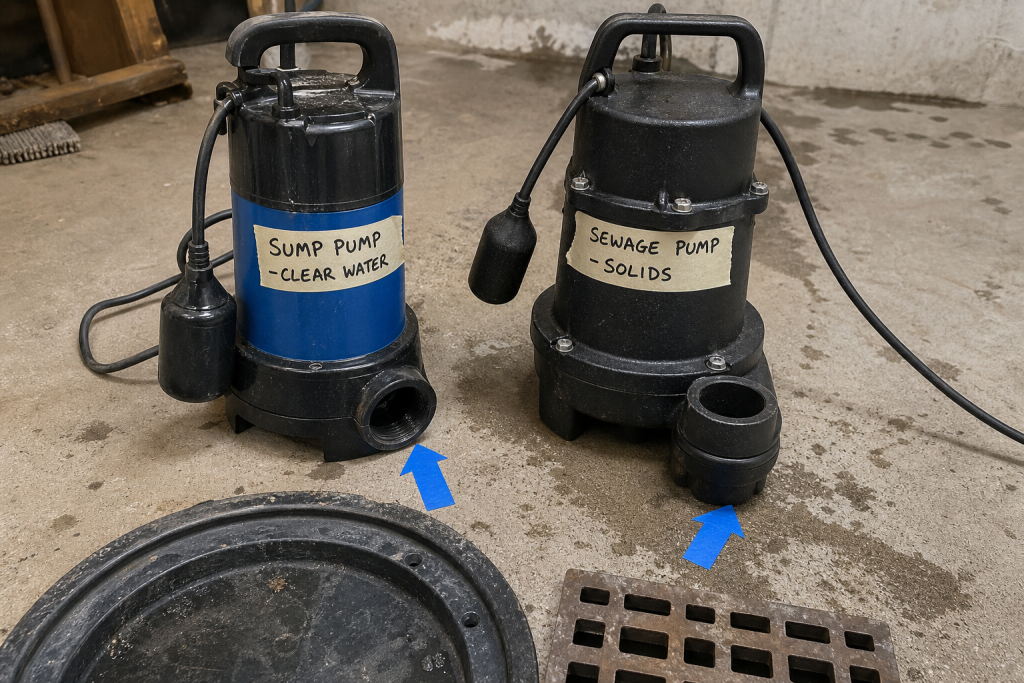
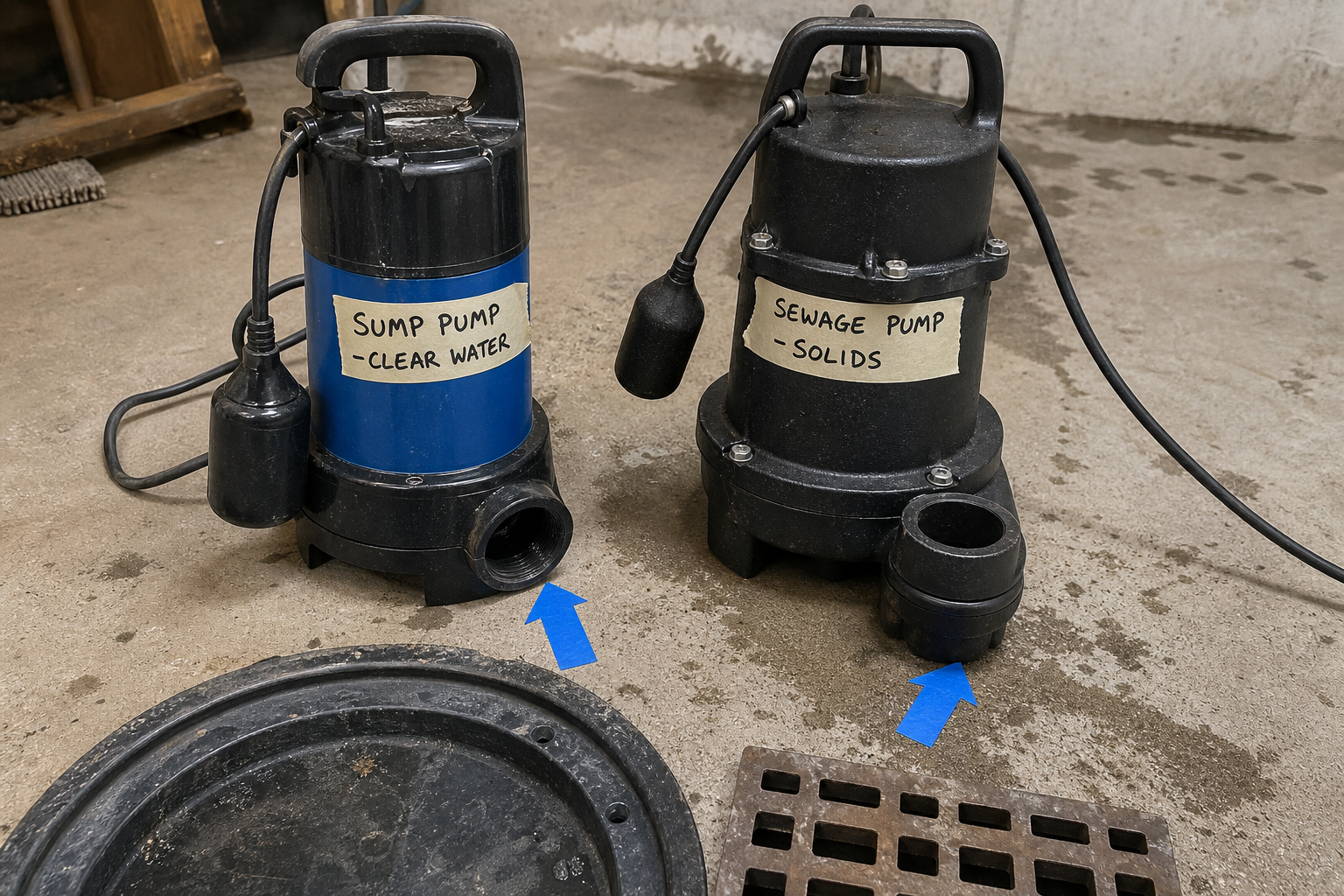
Field-style article image prepared for sump pump vs sewage pump.
A sump pump removes clean groundwater and surface water from a collection pit to prevent basement flooding, while a sewage pump handles wastewater containing solid waste from below-grade plumbing fixtures and discharges it to a sewer line or septic system. These two pump types are not interchangeable. Sump pumps operate in open pits and move only clear water, whereas sewage pumps require sealed, vented basins and specialized impellers to process human waste and debris. The core distinction lies in what each pump moves: sump pumps handle rainwater and groundwater intrusion, sewage pumps handle toilet waste and drainage from basement bathrooms or laundry rooms.
Property owners frequently confuse these systems because both involve basement water management. However, installing the wrong pump type creates code violations, system failures, and potential health hazards from sewer gas intrusion.
الوجبات الرئيسية
- Sump pumps move clean groundwater; sewage pumps move wastewater with solid waste—they serve fundamentally different drainage needs
- Sewage pumps require sealed basins with vent pipes to prevent sewer gas intrusion; sump pumps use open pits without venting
- Average installed cost: sewage pumps $800–$3,000+, sump pumps $400–$1,200
- Sewage pumps use cast iron or stainless steel construction with grinder mechanisms; sump pumps use thermoplastic or lighter materials with standard impellers
- A sump pump cannot replace a sewage ejector pump due to lack of solid-handling capability
What Is a Sump Pump?
Purpose and Primary Function
A sump pump’s sole function is removing accumulated groundwater and surface water from a collection basin installed at the lowest point of a basement or crawl space. The pump activates automatically when water reaches a preset level, discharging it away from the foundation through a dedicated pipe system.
These pumps protect against flooding from natural groundwater seepage, foundation drainage systems, and rainwater intrusion. They do not connect to plumbing fixtures and handle only clear or slightly sediment-laden water.
Typical Installation Locations
Sump pumps install in basement floor pits approximately 18–24 inches deep and 18 inches in diameter. The pit, called a sump basin, sits below the basement floor slab and collects water from perimeter drain tile systems or natural seepage through foundation walls.
Properties with high water tables, homes built on flood plains, and basements with active groundwater intrusion require sump pump systems. The pump typically positions in a corner or central low point where gravity naturally directs water flow.
Basic Operating Mechanism
Most sump pumps use submersible designs with a centrifugal impeller driven by a 1/3 to 3/4 horsepower electric motor. A float switch monitors water level and activates the pump when the basin fills to a predetermined depth.
The impeller draws water through an intake screen and forces it up through a check valve and discharge pipe. The check valve prevents backflow when the pump cycles off. Standard sump pumps use open or semi-open impeller designs optimized for high water volume rather than pressure or solids handling.
What Is a Sewage Pump?
Purpose and Primary Function
A sewage pump, also called a sewage ejector pump, moves wastewater containing human waste and solid debris from below-grade plumbing fixtures to the main sewer line or septic system. These pumps handle toilet discharge, sink drainage, shower water, and washing machine effluent from basement bathrooms, wet bars, and laundry facilities.
Unlike sump pumps that deal with clean water, sewage pumps must process organic matter, toilet paper, hygiene products, and other solids commonly found in household wastewater streams.
Typical Installation Locations
Sewage pumps install in sealed basins, typically 30 gallons or larger, positioned below the elevation of basement plumbing fixtures. The basin connects directly to drain lines from toilets, sinks, and other fixtures through standard plumbing connections.
Properties with below-grade living spaces, basement apartment conversions, or any plumbing installation below the main sewer line elevation require sewage ejector systems. Building codes mandate these pumps when gravity drainage to the municipal sewer or septic tank is not possible.
Basic Operating Mechanism
Sewage pumps use either grinder or non-grind designs with 1/2 to 2 horsepower motors. Grinder pumps macerate solid waste into slurry before pumping, while sewage ejector pumps use large-diameter impellers (typically 2 inches or more) that pass solids without grinding.
The sealed basin includes a vented lid that connects to the home’s vent stack, preventing sewer gas accumulation and pressure differentials. A float switch or internal pressure sensor activates the pump when wastewater reaches the operating level. Discharge occurs through a check valve and dedicated sewage line that connects to the main sewer lateral.
Core Technical Differences Between Sump Pumps and Sewage Pumps
Water Type and Solids Handling Capability
Sump pumps process only clear groundwater with minimal sediment. Their intake screens block particles larger than 1/4 inch, and their impellers cannot handle fibrous materials or solid waste without clogging or damage.
Sewage pumps handle raw wastewater (https://www.angi.com/articles/sewage-pump-vs-sump-pump.htm) with solid content up to 2 inches in diameter for non-grind models. Their impellers use open vane designs or cutting mechanisms specifically engineered for organic matter, toilet paper, and typical household debris. Attempting to pump sewage through a sump pump results in immediate impeller clogging and motor burnout.
Construction Materials and Durability Requirements
Sump pumps typically use thermoplastic housings (polypropylene or PVC) with cast iron or stainless steel motor housings. This lighter construction suits clean water applications and reduces cost.
Sewage pumps require corrosion-resistant materials to withstand continuous exposure to wastewater. Cast iron bodies, stainless steel impellers, and sealed motor housings prevent degradation from acidic waste and biological matter. These heavy-duty materials contribute to higher initial costs but deliver longer service life in harsh operating conditions.
Basin and Pit Requirements: Why Construction Differs
Sump pump pits remain open to the basement space, allowing easy inspection and maintenance access. The basin uses perforated liner material or solid plastic with weep holes that permit groundwater entry. No venting is required because the pit contains only clean water with no gas generation.
Sewage pump basins must be completely sealed with gasketed lids to contain wastewater and prevent sewer gas escape into living areas. These systems require vent pipes (https://drainexpress.ca/sump-pump-vs-sewage-ejector-pump/) connecting to the home’s plumbing vent stack, typically 2-inch diameter minimum, to equalize pressure and exhaust methane and hydrogen sulfide gases safely through the roof.
The sealed basin also accommodates a high-water alarm system that alerts occupants if the pump fails and wastewater approaches overflow level. Sump systems may include alarms, but the sealed sewage basin makes them a code requirement rather than an option.
How Pump Mechanisms Handle Different Materials
Sump pump impellers use closed or semi-open designs with narrow vane spacing optimized for water flow rather than solids passage. The impeller rotates at high speed (typically 3,450 RPM) to generate head pressure sufficient to lift water vertically and push it horizontally through discharge piping.
Sewage pump impellers feature wide vane spacing (2+ inches) and slower rotation speeds to handle chunky materials without clogging. Grinder-type sewage pumps add a cutting ring below the impeller that reduces solids to pumpable slurry before they reach the impeller chamber.
This mechanical difference explains why sump pumps fail catastrophically when exposed to sewage. The narrow impeller passages immediately bind with toilet paper and solid waste, stalling the motor and potentially causing permanent damage.
Sump Pump vs Sewage Pump: Detailed Comparison
**Criteria** | **Sump Pump** | **مضخة مياه الصرف الصحي** |
**Water Type** | Clean groundwater, rainwater | Raw sewage, wastewater with solids |
**Solids Capability** | None; particles >1/4 inch cause clogs | 2+ inches (non-grind); unlimited (grinder) |
**Construction** | Thermoplastic/cast iron | Cast iron/stainless steel |
**Basin Type** | Open pit, perforated | Sealed basin, watertight lid |
**Venting Required** | لا | Yes, connected to vent stack |
**Typical Horsepower** | 1/3 – 3/4 HP | 1/2 – 2 HP |
**Average Installed Cost** | $400 – $1,200 | $800 – $3,000+ |
**Maintenance Frequency** | Annual inspection | Quarterly inspection recommended |
**Typical Lifespan** | 7 – 10 years | 7 – 15 years (varies by usage) |
**DIY Installation** | Possible for experienced homeowners | Professional installation required |
Cost: Installation and Operating Expenses
Sump pump installations average $400–$1,200 (https://www.angi.com/articles/sewage-pump-vs-sump-pump.htm), with the pump unit itself costing $100–$400 and the remainder covering basin installation, discharge piping, and electrical connection. Battery backup systems add $150–$500.
Sewage pump installations range from $800–$3,000 or more, depending on basin size, pump type (ejector vs. grinder), and the complexity of connecting to existing plumbing and vent systems. Grinder pumps cost $800–$1,500 alone before installation labor. The sealed basin, vent pipe integration, and alarm system increase material and labor costs compared to open sump pits.
Operating costs differ minimally for typical residential use. Both pump types consume similar electricity during operation cycles. However, sewage pumps run more frequently in homes with active below-grade plumbing, potentially doubling annual energy consumption compared to a sump pump that activates only during wet weather.
Maintenance Requirements and Service Life
Sump pumps require annual inspection of float switch operation, discharge pipe integrity, and check valve function. Cleaning the basin and intake screen removes accumulated sediment. Battery backup systems need testing and battery replacement every 3–5 years.
Sewage pumps demand quarterly inspections due to harsher operating conditions. Maintenance includes checking grinder blade sharpness (if applicable), cleaning the basin of accumulated solids, inspecting seals and gaskets, and verifying alarm function. Professional service costs $150–$300 annually for sewage systems versus $75–$150 for sump pumps.
Service life depends on usage patterns and maintenance quality. Sump pumps typically last 7–10 years with moderate use. Sewage pumps last 7–15 years, with grinder pumps at the lower end due to mechanical wear on cutting components.
Power and Electrical Requirements
Sump pumps typically operate on standard 115V household circuits with 1/3 to 3/4 horsepower motors drawing 5–10 amperes. Most installations use existing basement circuits without requiring dedicated electrical lines, though a dedicated circuit is recommended for reliability.
Sewage pumps require 1/2 to 2 horsepower motors to generate sufficient pressure for lifting wastewater and pushing solids through discharge piping. Motors at 1 HP or greater typically need 230V circuits and 15–20 ampere capacity. Building codes often mandate dedicated circuits for sewage ejector pumps to prevent shared circuit overloads that could disable the pump during critical operation.
The higher power requirement reflects the greater head pressure needed to pump wastewater vertically 10–20 feet and horizontally 50–100 feet through sewage lines, compared to sump pumps that typically discharge within 10–30 feet of the pit.
Installation Complexity: DIY vs Professional
Experienced homeowners with plumbing and electrical skills can install sump pumps. The process involves excavating a pit, installing a perforated basin liner, connecting discharge piping with a check valve, and wiring the pump to a nearby electrical outlet. No plumbing code permits are typically required for sump pump installations.
Sewage pump installation requires professional plumbers in most jurisdictions. The work involves connecting to existing drain lines, integrating vent pipes with the home’s DWV (drain-waste-vent) system, ensuring proper basin sealing, and installing alarm systems. Building permits and inspection are mandatory. Improper installation creates health hazards from sewer gas exposure and code violations that affect property transfers.
Code Compliance and Venting Needs
Sump pump installations follow building codes for electrical safety and discharge location (not into sanitary sewers in most jurisdictions). Discharge pipes must direct water away from the foundation and neighboring properties.
Sewage pump systems must comply with plumbing codes (https://drainexpress.ca/sump-pump-vs-sewage-ejector-pump/) covering vent pipe sizing (typically 2-inch minimum), basin capacity (minimum 30 gallons for residential), discharge pipe diameter (3–4 inches), and alarm systems. The vent pipe prevents vacuum formation when the pump operates and allows sewer gases to escape through the roof rather than seeping into the basement.
Failing to properly vent a sewage basin creates negative pressure that can siphon water from fixture traps, allowing sewer gas to enter the home—a serious health and safety violation.
When to Use a Sump Pump vs Sewage Pump
Sump Pump Applications and Use Cases
Install a sump pump when groundwater intrusion, surface water accumulation, or foundation drainage requires management. Specific scenarios include:
- Basements with perimeter drain tile systems collecting groundwater
- Crawl spaces with recurring standing water from high water tables
- Properties in flood-prone areas requiring proactive water removal
- Basement floors with active seepage through cracks or foundation joints
- Homes with exterior foundation drainage systems directing water to interior collection points
Sump pumps protect structural integrity and prevent mold growth but do not connect to household plumbing fixtures.
Sewage Pump Applications and Use Cases
Install a sewage ejector pump when below-grade plumbing fixtures cannot drain by gravity to the main sewer line. Required applications include:
- Basement bathrooms with toilets, showers, or bathtubs
- Below-grade wet bars with sinks
- Basement laundry facilities with washing machines and utility sinks
- Finished basement apartments with full plumbing
- Any plumbing fixture installed below the elevation of the main sewer lateral
Sewage pumps are the only code-compliant solution for below-grade wastewater removal.
Properties That Require Both Pump Types
Many properties need both systems operating independently. A home with a finished basement bathroom requires a sewage pump for the toilet and fixtures, plus a separate sump pump to manage groundwater intrusion through the foundation.
The systems serve different drainage networks and cannot be combined. Connecting sewage drains to a sump pit creates health code violations and contaminates the groundwater discharge system. Conversely, directing foundation drainage into a sewage basin overloads the sewage pump with clean water, increasing wear and operating costs unnecessarily.
Can a Sump Pump Be Used for Sewage?
No. A sump pump cannot replace a sewage ejector pump (https://sumppumpcheck.com/install-sump-pump/sewage-vs-sump-pump/) under any circumstances. The impeller design, motor power, and open basin configuration make sump pumps incapable of handling solid waste safely or legally.
Attempting to use a sump pump for sewage results in immediate mechanical failure from clogged impellers, motor damage from overload, and code violations that create liability during property sales or insurance claims. Additionally, pumping raw sewage through a sump discharge creates environmental contamination and health department violations.
The only compliant solution for below-grade sewage is a purpose-built sewage ejector or grinder pump with properly sized basin and vent system.
Making the Right Pump Selection for Your Property
Decision Framework Checklist
**You need a sewage pump if:**
- Below-grade toilets, showers, or sinks require drainage
- Basement plumbing fixtures sit below the main sewer line elevation
- Local codes require ejector pumps for basement bathroom additions
- Wastewater contains solid waste and organic matter
**You need a sump pump if:**
- Groundwater seeps through foundation walls or floor
- Perimeter drain tile systems require discharge point
- Basement flooding occurs during heavy rain or snowmelt
- Crawl space accumulates standing water from high water table
**You need both systems if:**
- Your basement has both plumbing fixtures and groundwater intrusion
- Finished basement includes bathroom plus foundation drainage system
- Property requires separate management of sewage and clean water drainage
Common Selection Mistakes to Avoid
Installing undersized sewage pumps for the fixture load creates frequent cycling and premature failure. Grinder pumps suit high-volume applications or long horizontal discharge runs, while standard ejector pumps work for typical single-bathroom installations.
Attempting to drain both groundwater and sewage into a single basin violates code and creates cross-contamination. Each system requires dedicated basins, pumps, and discharge piping.
Choosing a sump pump based solely on low cost ignores backup power needs and discharge capacity. Properties with frequent flooding benefit from 1/2 HP or larger pumps with battery backup systems, despite higher initial investment.
Skipping professional installation for sewage pumps to save money results in code violations, failed inspections, and potential re-work costs exceeding the original professional installation price.
Next Steps After Identifying Your Need
Once you determine which pump type your property requires, calculate the system capacity needed based on water volume or fixture load. For sewage pumps, count the number of fixtures draining to the basin and confirm the pump can handle simultaneous usage.
For sump pumps, measure the basement square footage and typical water intrusion rate to size the pump’s gallons-per-hour capacity appropriately. Consider vertical lift distance (head pressure) and horizontal discharge length when selecting horsepower.
Contact licensed contractors for sewage pump installations to ensure code compliance. Obtain necessary building permits before starting work. For sump pump installations, verify local discharge regulations to avoid directing water into sanitary sewer systems where prohibited.
الأسئلة الشائعة
Can a sump pump replace a sewage ejector pump?
No, a sump pump cannot replace a sewage ejector pump. Sump pumps lack the impeller design, motor power, and construction materials necessary to handle solid waste. Their narrow impeller vanes clog immediately when exposed to toilet paper and organic matter, causing motor failure.
Additionally, sump pumps use open pits without venting, creating sewer gas hazards if connected to wastewater drains. Only purpose-built sewage pumps with sealed basins and vent connections meet building codes for below-grade wastewater removal.
Which pump do I need for a basement bathroom?
A basement bathroom requires a sewage ejector pump. Any plumbing fixture below the main sewer line elevation—including toilets, sinks, showers, and floor drains—needs a sewage pump to lift wastewater to the gravity drainage system.
If your basement also experiences groundwater intrusion, install a separate sump pump system with its own basin and discharge line. The two systems must remain independent to prevent cross-contamination and maintain code compliance.
Why does sewage pump installation cost more than sump pump installation?
Sewage pump installation costs $400–$1,800 more than sump pump installation due to several factors. The pump itself costs more ($800–$1,500 vs. $100–$400) because of heavy-duty construction and solid-handling capability.
Installation complexity increases costs further. Sewage systems require sealed basins, vent pipe integration with the home’s DWV system, connections to existing drain lines, alarm installation, and building permits with inspections. Professional plumbers charge $75–$150 per hour for this specialized work versus DIY sump installation that eliminates labor costs entirely.
Do I need both a sump pump and a sewage pump?
Many properties require both systems if the basement has plumbing fixtures and experiences groundwater intrusion. Each pump serves a distinct purpose: sewage pumps handle wastewater from toilets and sinks, while sump pumps manage foundation drainage and groundwater.
The systems cannot be combined. Directing sewage into a sump pit violates health codes and contaminates groundwater discharge. Routing foundation drainage to a sewage basin overworks the sewage pump with clean water and increases operating costs. Properties with finished basements typically need both systems operating independently.
الخاتمة
Sump pumps and sewage pumps serve fundamentally different functions in residential drainage systems. Sump pumps remove clean groundwater to prevent flooding, while sewage pumps handle wastewater with solid waste from below-grade plumbing fixtures. The systems are not interchangeable due to distinct construction, basin requirements, and operating mechanisms. Select a sump pump for foundation drainage and groundwater management. Choose a sewage ejector pump for basement bathrooms, wet bars, or any plumbing below the main sewer line elevation. For properties with both requirements, install dedicated systems for each drainage type to ensure code compliance and reliable performance.